
Curry is one of the more unforgiving things you can spill on a carpet. The yellow stain from turmeric – specifically a compound called curcumin – bonds aggressively to carpet fibres and sets fast. The good news is that a fresh spill, treated promptly and correctly, can usually be removed completely. A dried or old stain is a different challenge but not always a lost cause.
Here’s what to do, step by step.
The most important rule: act fast and never use hot water
Heat permanently sets the curcumin pigment in turmeric into carpet fibres. Do not use hot water, do not use a steam cleaner, and do not put anything in the tumble dryer until the stain is completely gone. Cold water only throughout
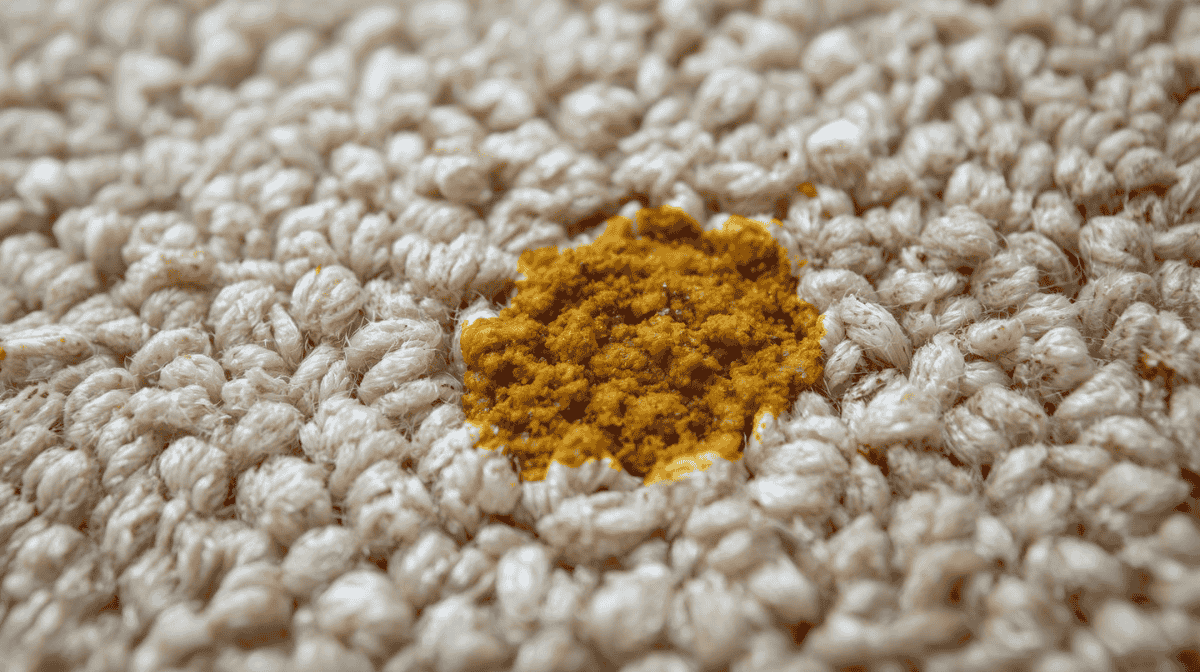
Immediate Response — Fresh Curry Spills
The first two minutes after a curry spill will determine how difficult removal is. Don’t panic, but don’t delay
- Remove the solid debris: Scoop up any solid curry using a spoon or blunt knife. Work from the outside of the spill inward — this contains it rather than spreading it further. Do not press down or rub.
- Blot up the liquid: Press a thick wad of paper towels or a clean white cloth firmly onto the stain. Apply pressure, then lift cleanly. Replace with fresh towels and repeat until no more liquid transfers. Always blot — never rub. Rubbing spreads the stain and works the curcumin deeper into the pile.
- Apply your cleaning solution: See the cleaning solutions section below. Work from the outside of the stain inward, applying with a cloth or sponge using a blotting motion.
- Rinse with cold water and blot dry: Once the stain has lifted, rinse the area with cold water to remove any cleaning solution residue — leftover solution attracts dirt and can cause the area to re-soil faster. Blot thoroughly until dry. Do not use heat to speed drying.
- Always do a patch test first: Before applying any cleaning solution to a visible area, test it on a hidden section of carpet — inside a wardrobe or under a piece of furniture. Wait a few minutes and check for colour change or fibre damage. This is especially important for hydrogen peroxide and oxygen bleach on darker or delicate carpets.
Which Cleaning Solution to Use
Start with the gentlest option first. If the stain is partially lifting, keep going with the same solution before escalating. Layering multiple chemicals simultaneously can damage fibres and create unexpected reactions.
| Dish soap + cold water | Fresh spills, first attempt | Mix one teaspoon of washing-up liquid with 500ml cold water. Apply with a cloth, blotting from the outside in. The gentlest option — always start here. |
| Dish soap + white vinegar | Fresh to moderate stains | Add one tablespoon of white vinegar to the dish soap solution. Vinegar helps break down the curcumin pigment and neutralises any odour from the spices. |
| Baking soda | After liquid treatment | Once you’ve treated the stain with a liquid solution, sprinkle baking soda generously over the damp area. Leave for 15 to 20 minutes to absorb residual moisture and oils, then vacuum. Good used alongside dish soap or vinegar — not a standalone stain remover. |
| Hydrogen peroxide (diluted) | Stubborn or light-coloured carpets | Mix one part 3% hydrogen peroxide with two parts cold water. Patch test first — it has mild bleaching properties and can affect darker carpet dyes. Avoid on wool. Apply, blot, rinse thoroughly. |
| Oxygen bleach | Set-in stains, light carpets | Mix as per product instructions. Targets curcumin specifically without the fibre damage of chlorine bleach. Still requires a patch test. Not suitable for wool or delicate fibres. |
| Rubbing alcohol | Oily residue | Apply sparingly with a cloth and blot — do not saturate. Effective on the oil component of a curry stain. Follow with a dish soap treatment to address the curcumin pigment. |
A note on ammonia: it can be effective on persistent stains but requires careful handling — good ventilation, no mixing with other chemicals, and it is not suitable for wool carpets. Given that hydrogen peroxide and oxygen bleach cover the same ground more safely for most households, ammonia is rarely the right first choice
Tackling a Dried Curry Stain
A dried stain is harder to remove than a fresh one but the approach is similar — it just requires more patience and potentially more than one treatment cycle.
- Vacuum the area first to remove any loose dried spice or debris before applying any liquid
- Rehydrate the stain with a small amount of cold water — this softens the dried curcumin and makes it more receptive to cleaning solutions
- Work through the solutions in the table above, starting with dish soap and escalating to hydrogen peroxide or oxygen bleach if needed
- Allow a longer dwell time — up to 30 minutes — before blotting
- Repeat the treatment cycle if the stain is lifting but not fully gone — allow the carpet to dry fully between cycles
If you’ve tried two full treatment cycles and the stain is still clearly visible, it has likely bonded deeply enough that DIY methods won’t shift it without risking fibre damage from stronger chemicals. That’s the point to call a carpet stain removal professional.
A Word on Different Carpet Types
- Wool carpets. Avoid hydrogen peroxide, ammonia and oxygen bleach. Wool is sensitive to alkaline chemicals and can be permanently damaged. Stick to the dish soap and vinegar solution, and if the stain persists, get a professional in rather than escalating to stronger products.
- Synthetic carpets (polypropylene, nylon, polyester). More tolerant of a wider range of cleaning products but still require a patch test before using hydrogen peroxide or oxygen bleach. These fibres resist staining better than wool, so a prompt response with dish soap often does the job.
- Delicate, antique or high-value rugs. Do not attempt DIY stain removal. The risk of permanent damage is too high. Get a professional assessment.
- Upholstery. The same solutions apply to fabric upholstery, but use less liquid and avoid saturating the foam underneath. Blot rather than rinse, and ensure the fabric dries thoroughly to prevent mould in the cushioning.
Mistakes That Make Curry Stains Worse
- Using hot water — sets the curcumin permanently into the fibres
- Rubbing the stain — spreads it and pushes it deeper into the pile
- Skipping the patch test before using hydrogen peroxide or oxygen bleach
- Working from the centre outward — always blot from the outside in to stop the stain spreading
- Over-wetting the carpet — excess moisture can cause mould in the backing and underlay, and can spread the stain to a larger area than the original spill
- Layering multiple chemicals at the same time — use one, rinse fully, then try another if needed
Leaving the stain to dry between attempts without rinsing out the cleaning solution — residue left in the fibres will attract dirt
When to Call a Professional
Some curry stains, particularly old ones or those on delicate carpets, reach a point where further DIY treatment risks causing more damage than the stain itself. Signs you’ve reached that point:
- The stain has been treated multiple times with no significant improvement.
- The carpet is wool, delicate or high-value – particularly any patterned or Oriental rug.
- The stain has been set for several days or more and has had time to bond deeply.
- The area is large enough that DIY treatment risks uneven colour or texture.
Professional carpet cleaning in Glasgow uses specialist stain treatment products that are significantly more concentrated than anything available over the counter, combined with hot water extraction that physically removes the stain residue from deep within the pile rather than redistributing it. A stain that has resisted home treatment can often be fully removed or significantly reduced with professional intervention.
If you’re in Glasgow, Paisley or the surrounding area and a curry stain has beaten your best efforts, we can help. Call us on 0141 212 0212 or contact us for a free quote.
