
Wool carpets are worth looking after properly. They’re warmer underfoot, more resilient to crushing than synthetics, and they age better – but only if they’re cleaned correctly. The key rules are: always use cold water, never use heat, and avoid alkaline or bleach-based products which damage wool fibres and strip the natural lanolin coating.
- Vacuuming: use low suction with the beater bar off, in the direction of the pile, two to three times a week in high-traffic areas
- Spills: blot immediately with a clean white cloth — never rub. Treat with a solution of one teaspoon of pH-neutral washing-up liquid in 500ml cold water, applied sparingly
- What to avoid: steam cleaners, hot water, bleach, hydrogen peroxide, ammonia, alkaline detergents and tumble dryers — all cause irreversible damage to wool
- Drying: ventilate the room and use a fan after any wet cleaning. No direct heat sources
- Deep cleaning: best left to a professional — over-wetting causes shrinkage that cannot be undone. For most households, professional cleaning every 12 to 18 months is the right interval
- Odour: baking soda applied dry and vacuumed after 30 minutes is safe to use on wool between clean
Why Wool Carpets Need a Different Approach
What makes wool different
Wool fibres have a natural outer coating — lanolin — that gives them a degree of natural stain resistance and moisture repellency. This is one of wool’s great advantages, but it also means that cleaning agents which work well on synthetic fibres can strip this coating and leave the wool unprotected.
Wool is also sensitive to heat, which causes the fibres to felt — the microscopic scales on each strand interlock and mat together permanently. This is why steam cleaners, hot water and tumble dryers are all off the list for wool. Shrinkage is the other risk: wool absorbs water readily and can contract significantly if over-wetted or dried too quickly with heat.
Finally, wool reacts badly to alkaline cleaning agents. High-pH detergents, bleach-based products and many general-purpose carpet shampoos are formulated for synthetics and will damage wool fibres or cause colour loss. Always check the pH of any product before using it on wool — pH-neutral or mildly acidic is what you’re looking for.
Check the label before you clean anything
Before reaching for any product, check the care label on your carpet or rug. Most wool carpets will specify ‘dry clean only,’ ‘spot clean only’ or give a Woolmark care symbol. If the label says dry clean only, do not attempt water-based cleaning at home — call a professional. If there’s no label, treat it cautiously and patch test everything.
What to avoid on wool — the short list
| Avoid | Why |
| Steam cleaners / hot water | Heat causes felting and shrinkage — damage that cannot be reversed |
| Bleach or bleach-based products | Permanently destroys wool fibres and strips colour |
| High-pH / alkaline detergents | Breaks down the lanolin coating and damages the fibre structure |
| Hydrogen peroxide | Bleaching effect risks colour loss on wool, especially darker shades |
| Ammonia-based cleaners | Highly alkaline — causes fibre damage and colour change |
| Scrubbing or hard brushing | Lifts and mats the pile, causing irreversible texture damage |
| Tumble drying or direct heat | Causes severe shrinkage and felting |
What to use instead
For routine spot cleaning, a small amount of pH-neutral washing-up liquid diluted in cold water is generally safe. White vinegar diluted with water (one part vinegar to three parts water) is mildly acidic and wool-safe, useful for light stains and odour. Baking soda can be used dry for odour absorption without risk to the fibres.
For anything more than spot cleaning, look for products specifically labelled as wool-safe or Woolmark-approved. These are formulated to the correct pH and will not strip the lanolin or affect the dye.
Routine Vacuuming
Regular vacuuming is the single most important thing you can do to maintain a wool carpet. Grit and soil particles that sit in the pile act like sandpaper on the fibres with every footstep, dulling the surface and wearing the pile over time. Vacuuming before this happens prevents the damage rather than trying to reverse it.
How to vacuum wool correctly
- Use the lowest suction setting your vacuum allows — wool pile can be pulled and distorted by high suction, particularly on loop or Berber constructions
- Turn the beater bar off, or use a suction-only head if your machine has one — rotating beater bars can snag and pull wool loops
- Vacuum in the direction of the pile for the main pass — going against the pile can stress individual fibres
- Use slow, overlapping passes rather than quick back-and-forth movements
- For high-traffic areas, vacuum two to three times per week; lower-traffic areas once a week is sufficient
New wool carpets may shed loose fibres during the first few months — this is normal and not a sign of a quality problem. Regular vacuuming removes this fluff without affecting the carpet’s long-term appearance.
Spot Cleaning and Spill Treatment
How you respond in the first minute after a spill will determine whether it becomes a stain. The principles are the same as for any carpet but wool’s sensitivity to over-wetting and heat make precision more important.
- Blot immediately — never rub:Use a clean white cloth or paper towels. Press firmly and lift cleanly. Rubbing spreads the spill and works it into the pile. Rotate to a clean section of cloth each time so you’re lifting liquid rather than re-depositing it.
- Remove solid debris carefully: Scoop from the outside inward using a spoon or blunt knife. Don’t press down into the pile.
- Apply your cleaning solution sparingly: Mix one teaspoon of pH-neutral washing-up liquid with 500ml cold water. Apply a small amount to a clean cloth — not directly to the carpet — and blot the stain from the outside in. The goal is to use as little moisture as possible.
- Rinse with cold water: Dampen a fresh cloth with plain cold water and blot the area to remove any soap residue. Residue left in wool fibres attracts dirt.
- Dry thoroughly: Press a dry cloth or paper towels onto the area to absorb moisture. Place a small fan nearby if possible. Do not apply heat. Check the area is fully dry before walking on it — wool that stays damp can develop a musty odour.
Specific stains on wool
Coffee and tea. Blot immediately, then treat with the dish soap solution. Rinse well. If a pale shadow remains once dry, a second light treatment usually clears it.
- Red wine. Blot immediately and thoroughly before applying any solution – the less liquid left in the pile, the easier removal is. Treat with dish soap solution. For a full step-by-step guide, see our post on how to remove red wine from carpet. Avoid white wine as a treatment, contrary to popular advice — it dilutes but doesn’t remove the pigment.
- Pet accidents. Blot up as much liquid as possible, then treat with diluted white vinegar (one part vinegar to three parts cold water) to neutralise the odour. Follow with the dish soap solution. Once completely dry, sprinkle baking soda over the area, leave for 30 minutes and vacuum gently. Do not use enzyme cleaners on wool without confirming they are explicitly wool-safe – many are not. See our post on how to get pet urine smell out of carpet for more information.
- Dried or set-in stains. Scrape away any dry residue gently with a blunt knife, then re-wet the area minimally with cold water before applying the dish soap solution. Old stains on wool often need more than one treatment cycle. If two attempts don’t shift it, stop – further DIY treatment is more likely to damage the carpet than remove the stain. That’s the point to call in a professional stain removal service rather than risk permanent damage to the fibres.
Deep Cleaning a Wool Carpet
A full deep clean of a wool carpet , where the whole carpet is wetted, cleaned and dried, is best left to a professional. The risks of over-wetting, uneven drying and shrinkage on a wool carpet are significant, and the cost of a professional clean is small relative to the replacement cost of a quality wool carpet.
That said, a wool carpet in good condition with no stubborn staining doesn’t need deep cleaning frequently. For most households, professional cleaning in Glasgow once every 12 to 18 months is the right interval. High-traffic areas or homes with pets or young children may benefit from annual cleaning.
What professional deep cleaning does for wool
Professional carpet cleaning with the correct method and products achieves what DIY cannot: controlled moisture application, extraction equipment that removes water effectively from deep in the pile, and professional-grade wool-safe cleaning solutions that clean thoroughly without compromising the fibre.
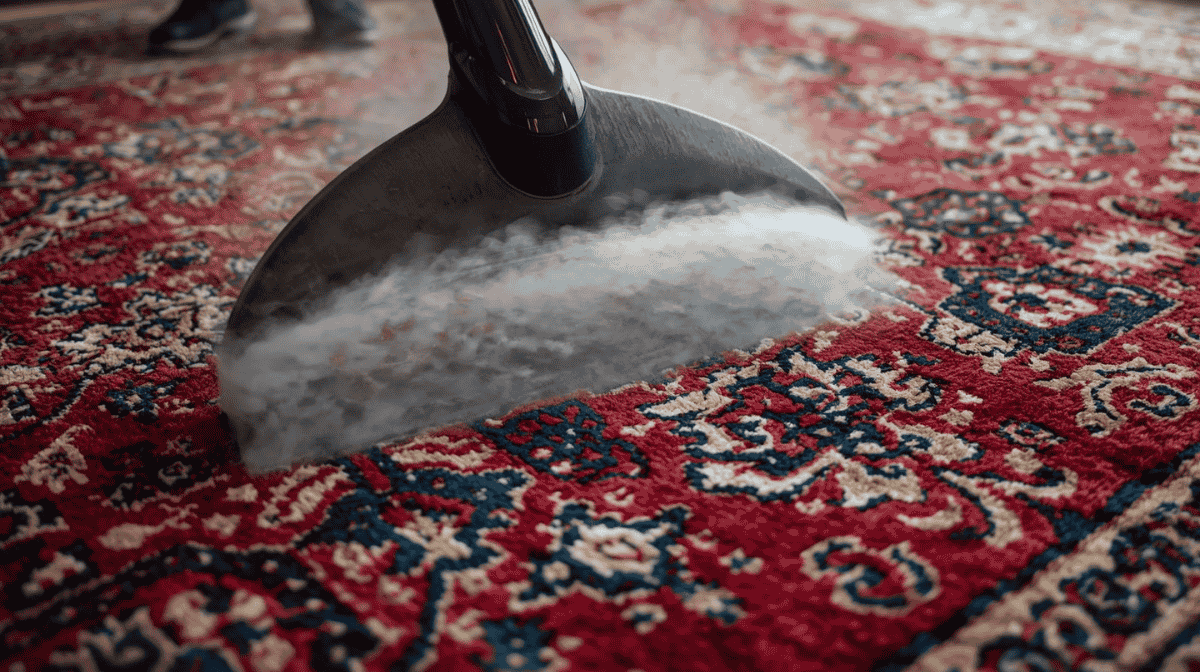
Hot water extraction — done correctly with wool-appropriate temperature and products — is one of the most effective methods for wool carpets. The key difference from a DIY approach is the extraction capability: professional equipment removes significantly more water from the carpet after cleaning, dramatically reducing drying time and the associated shrinkage risk.
At Acorn, we’re NCCA-accredited and experienced with wool carpets across Glasgow and Paisley. We use the appropriate products and temperature settings for wool specifically — not a one-size-fits-all approach. If you’re unsure whether your wool carpet needs professional attention, call us for a chat before attempting anything that might risk damage.
The case for professional cleaning on valuable wool carpets
A high-quality wool carpet can cost several thousand pounds to replace. A professional clean costs a fraction of that. Find out how much carpet cleaning costs if you’d like a clearer picture before booking. For any wool carpet you’d be genuinely unhappy to damage particularly handmade, Oriental or antique rugs professional treatment is the only sensible option for anything beyond basic spot cleaning.
Drying and Finishing
Wool dries more slowly than synthetic fibre. After any wet cleaning — spot treatment or professional clean — ventilation is essential.
- Open windows and doors to maximise air circulation through the room
- Place a fan directed across the surface of the carpet to accelerate evaporation
- Turn on the central heating — warm, dry air speeds drying without the shrinkage risk of direct heat on the fibres
- Do not use hairdryers, heated pads or any form of direct heat on the carpet surface
- A well-ventilated room with moderate warmth will typically dry a spot-cleaned area within two to four hours; a professionally cleaned room carpet within four to eight hours
- Before assuming the carpet is dry, press a dry cloth firmly onto the area — if it comes away damp, allow more time
Once fully dry, gently brush the pile in one direction with a soft-bristle brush to restore the texture. A final light vacuum finishes the job.
Long-Term Wool Carpet Care
A few consistent habits make a significant difference to how a wool carpet holds up over years of use.
- Vacuum regularly – two or three times a week in high-traffic areas, once a week elsewhere
- Use entrance mats at all external doors to reduce the amount of grit and soil tracked onto the carpet
- Rotate rugs or furniture placement periodically to ensure even wear — wool fades and compresses more noticeably in consistently high-traffic paths
- Address spills immediately rather than leaving them to set – a five-minute response time makes most spills straightforward; an hour later is significantly harder
- Avoid shoes on wool carpets where possible – grit from outdoor shoes is one of the primary causes of fibre wear
- Book a professional clean every 12 to 18 months – this resets accumulated soil load that vacuuming can’t reach and keeps the carpet looking its age rather than older
- Baking soda for odourIf your wool carpet has developed a general odour between cleans, baking soda is one of the few DIY treatments that is genuinely safe to use. Sprinkle it generously, leave for 30 minutes to an hour, then vacuum slowly and thoroughly on a low-suction setting. Repeat if needed. Do not leave it for hours on a damp carpet – baking soda left in wet wool can be difficult to extract.
If your wool carpet has a stain that’s beaten your best efforts, or it’s simply due a proper deep clean, we can help. Acorn Carpet Cleaning has been looking after wool carpets across Glasgow and Paisley for over 30 years. We’re NCCA-accredited, we use wool-safe cleaning solutions, and we remove your stain or you don’t pay.
Call 0141 212 0212 or contact us for a free, no-obligation quote.
